Have you used the sign.online web app to digitally sign documents and legally-binding contracts? Digital signing is notoriously complex, with different signature types, identity requirements, trust lists, certificates, and regulations. sign.online built our digital signature web application to remove this complexity so anyone can sign documents securely using only their email address.
This article summarises the use and legal status of electronic signatures. We also show you how easy it is to switch to digital signing for all of your business, public services, and personal dealings. If you do, you’ll save time and money, benefit from added data security and protection, and cut all paper bureaucracy from your life.
sign.online Digital Signature Web Application
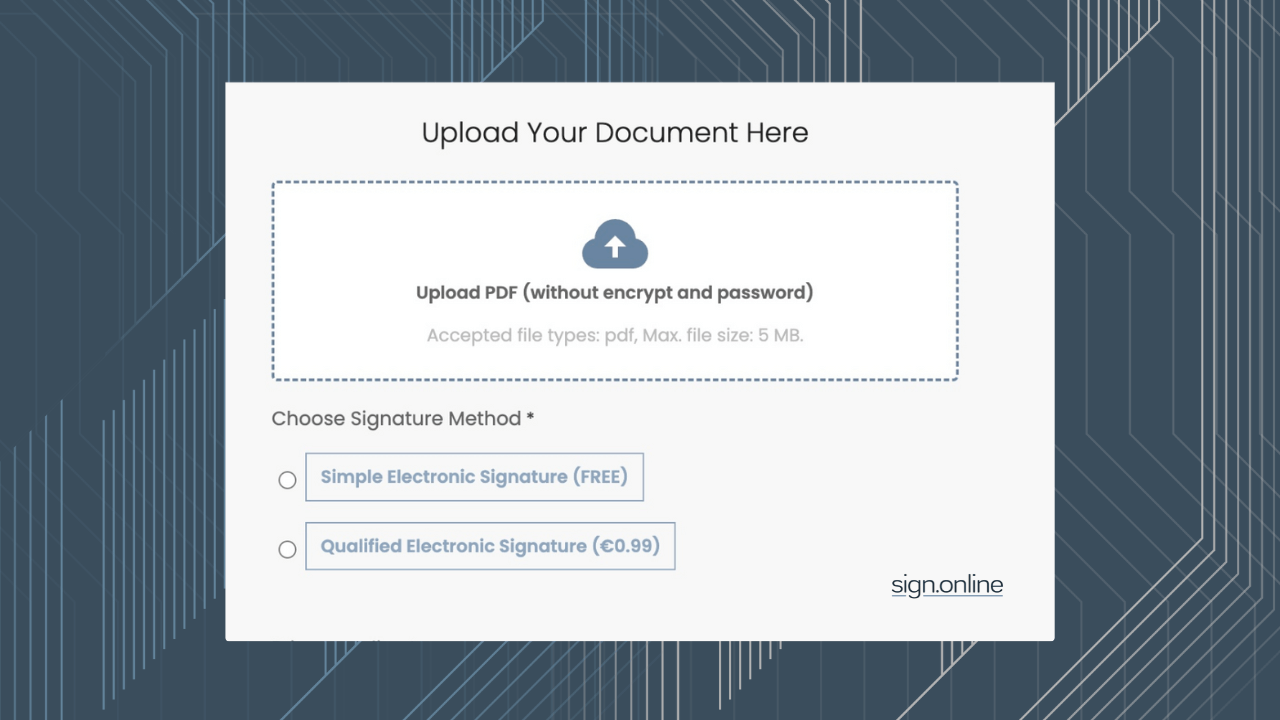
The sign.online digital signing web application offers 40+ Qualified Electronic Signatures and Advanced Electronic Signatures, as well as our free Simple Electronic Signature. Government and Business clients also benefit from turnkey solutions, adapting our web app to automate your document management systems and contract signing workflows.
Do you have an email address? It’s all you need to use the sign.online platform. Use your email to sign documents online with our Simple Electronic Signature.
Plus, we don’t ask for a subscription fee or registration to make Advanced and Qualified Electronic signatures in the app in case you are needing more legally robust identity verification and security.
Simply choose from the various legally valid signature providers in your country and sign using the appropriate identification tools. New signature providers are added continuously, making it possible to sign digitally from almost every country in the world.
What is the Difference between a Digital Signature and an Electronic Signature?
While all digital signatures are electronic signatures, not all electronic signatures are digital signatures.
- A ‘digital signature’ is a specific type of electronic signature that utilizes cryptographic technology to verify the authenticity of a document and the identity of the signer.
- An ‘electronic signature’ is a broader term encompassing various methods of signing documents electronically, which may include digital signatures but can also include other forms of electronic authentication such as typing a name or clicking a checkbox.
Are Electronic Signatures Legally Binding?
Electronic signatures are legally binding in most jurisdictions around the world. They are recognized as valid signatures under various electronic signature laws and regulations, including the Electronic Signatures in Global and National Commerce Act (ESIGN) in the United States and the eIDAS Regulation in the European Union. As long as a digital signature meets the requirements outlined in the relevant laws, it holds the same legal status as traditional handwritten signatures.
The European market for digital signatures is rapidly expanding, driven by strong regulatory frameworks such as eIDAS and GDPR, which mandate secure and efficient digital processes. Digital signing requires both trust and convenience to be useful. The sign.online digital signature web application is built on the same security and compliance principles used across Europe’s most reliable digital identity systems.
Simple vs Advanced vs Qualified Electronic Signatures
Simple, advanced, and qualified electronic signatures represent a tiered system of electronic consent, with each level offering different security, identity verification, and legal weight. The criteria for each are set out in the European Union Electronic Identification, Authentication and Trust Services Regulation (eIDAS).
Simple Electronic Signatures (SES)
SES are the most basic type of e-signature, representing proof of intent. Examples include typing your name at the end of an email or attaching a scanned image of a physical signature.
For SES, security is low as there is minimal need for identity verification. The main use cases include everyday, low-risk transactions where identity verification is not critical. SES are legally valid if the parties agree to use them. They’re not appropriate where identity assurance is required.
Sign documents with SES online for FREE (up to 2 signers per document) on the sign.online web application. It’s easy, quick, accessible and web-based.
For everyday needs, our free electronic signature service allows users to easily sign documents online without hidden fees. Perfect for individuals and small businesses, this service eliminates paperwork and ensures a smooth digital experience. No subscription, no registration, easy to use.
Advanced Electronic Signatures (AES)
AES build on SES with by adding strengthened identity verification. AES are linked to and controlled by the signatory. They rely on public-key infrastructure, which use certificates and cryptographic keys.
Security is medium, with measures to link the signature to the individual and protect against forgery. AES can detect if a signed document has been altered in any way. Use cases include high-value transactions where a higher level of trust and identity verification is needed.
In the European Union, the source of trust for AES and QES (see below) is the EU Digital Signature Trusted List. All AES and QES available on our platform are issued by providers listed on the EU Trusted List, ensuring cross-border legal acceptance and verifiable identity assurance.
Qualified Electronic Signatures (QES)
QES are the most secure and legally robust of the e-signatures. They have the same legal effect as handwritten signatures in the EU.
QES build on AES as they must be created by a qualified signature creation device. Examples include highly regulated or cross-border transactions, such as mortgages or public administration tasks. Digital signatures made using the Estonian national digital identity card or Smart-ID are QES.
Security is high, as it requires identity verification (often face-to-face or video call) and is based on a qualified certificate issued by a qualified trust service provider. Use cases include legally binding agreements where the highest level of assurance and legal protection is required.
Pay just €0.99 per signature (up to 4 signers per document) to make QES on the sign.online web app. Plus, for QES only on the sign.online web app, you can email signed copies of the signed document to up to 50 recipients for free. This means your business can send a standard amendment to service contracts to multiple clients at once and collect their QES within minutes. All done with no registration, no software, and fully compliant with eIDAS.
For enterprise and government clients, you pay only for the exact signatures consumed meaning you can make a predictable budget.
Switch from Paper to Digital: Start Signing on the sign.online Web App today
With the sign.online web app and associated turnkey solutions, benefit from:
- Paper-free processes: No printing, scanning, mailing, or paper storage. Our online platform eliminates paper and inefficiencies, reducing administrative bottlenecks.
- Reduce costs: Businesses or Public sector agencies seeking to reduce operational costs or adopt paperless practices benefit significantly by switching to digital signatures.
- Safe and compliant: Comply with EU digital signature (eIDAS) and data protection (GDPR) gold standards as well as cross-border regulations. Meet digitalisation directives. Gain trust and significantly cut fraud risk with verified signatures, secure signing, and digital audit trails.
- User-centric design and language: If you speak English, you can use our platform, which works immediately in your browser. No special training or technical language skill is required. Turnkey solutions involve minimal consultation and IT integration.
Explore how we’re making borderless signing simple, seamless, and secure. Start using the sign.online web application today.
If you’re looking for a turnkey solution to streamline manual business workflows or public services, get in touch: [email protected]
Written by: Hannah Brown (Chief Content Strategist) on behalf of sign.online